



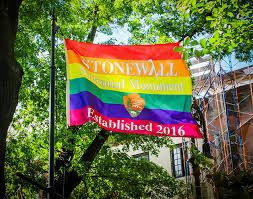
The Trump administration agreed to permanently restore the Pride flag at the Stonewall National Monument in New York City following a federal court settlement reached April 13. The agreement reverses a February decision that had sparked widespread outrage from LGBTQ+ advocates, elected officials, and faith leaders alike.
The settlement, secured by Lambda Legal and Washington Litigation Group on behalf of the Gilbert Baker Foundation, Village Preservation, and Equality New York, requires the National Park Service to rehang the flag on the monument’s official flagpole within seven days and maintain it permanently. Critically, the agreement confirms the Pride flag falls within existing NPS policy, vindicating the central argument plaintiffs made when they filed suit just eight days after the flag was removed.
“The government has acknowledged what we argued from day one: The Pride flag belongs at Stonewall,” said Alexander Kristofcak, lead counsel for the plaintiffs. “The flag will be restored, it will fly officially and permanently, and the court will stand ready to enforce that commitment.”
The National Park Service had initially justified the removal under the Department of the Interior’s guidance barring non-agency flags under NPS-managed flagpoles. Amongst the critics were New York City Mayor Zohran Mamdani and Governor Kathy Hochul, who condemned the action as an act of erasure. Senate Minority Leader Chuck Schumer called it a “deeply outrageous action” and pushed for legislation to protect the flag going forward. Defiant elected officials and New Yorkers re-raised the flag a few days after its removal, though not sanctioned by the federal government.
Faith communities were among the most vocal opponents. The Reverend Caroline Stacey, rector of St. Luke in the Fields Episcopal Church, which is located two blocks from the monument’s location, welcomed the settlement. Stacey also noted it fell short of a full victory by not including the more inclusive Progress Pride flag, which represents LGBTQ+ communities of color, transgender and non-binary individuals in the ruling. New York Bishop Matthew Heyd welcomed the reversal but cautioned that more remains to be done. “Taking down the Pride flag from Stonewall was unjust and the reversal is right,” he said. “There’s more to do. The administration continues to target the LGBTQ+ community. We believe we are all created in the image and likeness of God. We’ll continue to celebrate and support our LGBTQ+ siblings.
Advocates also noted the ruling’s broader implications. The Trump administration had similarly removed a slavery exhibit from Independence National Historical Park in Philadelphia, raising concerns about a systematic effort to strip historically marginalized communities from the national narrative.
The monument at the center of the dispute stands as hallowed ground in American civil rights history. Stonewall National Monument was designated in 2016 by President Barack Obama as the first U.S. national monument dedicated to LGBTQ+ rights and history. It marks the site of what is known as the Stonewall Uprising. This refers to a series of spontaneous protests ignited in the early hours of June 28, 1969, when patrons of the Stonewall Inn, a Greenwich Village gay bar, fought back against a police raid. The rebellion lasted several nights and is widely regarded as the catalyst for the modern LGBTQ+ rights movement.
Before Stonewall, nearly every aspect of open gay life in New York City was criminalized. People could be arrested and charged with “sexual deviancy” if they were not wearing at least three items of clothing that conformed to their assigned sex. This law effectively targeted gender non-conforming individuals, and bars that served gay patrons were routinely raided. The uprising changed everything. As scholar Frank Kameny observed, “By the time of Stonewall, we had fifty to sixty gay groups in the country. By two years later, to the extent a count could be made, it was twenty-five hundred. And that was the impact of Stonewall.”
“This is our history, and we should not allow our history to be denied or erased,” said Elizabeth Inoza, a community member who gathered at the monument after the settlement was announced.